have you

Standard

The Swan

Did you too see it, drifting, all night, on the black river?
Did you see it in the morning, rising into the silvery air~
An armful of white blossoms,
A perfect commotion of silk and linen as it leaned
into the bondage of its wings; a snowbank, a bank of lilies,
Biting the air with its black beak?
Did you hear it, fluting and whistling
A shrill dark music~like the rain pelting the trees~like a waterfall
Knifing down the black ledges?
And did you see it, finally, just under the clouds~
A white cross Streaming across the sky, its feet
Like black leaves, its wings Like the stretching light of the river?
And did you feel it, in your heart, how it pertained to everything?
And have you too finally figured out what beauty is for?
And have you changed your life?

By Mary Oliver

made it again

Standard
Helen Frankenthaler, Royal Canyon, 1991, acrylic on canvas

Helen Frankenthaler, Royal Canyon, 1991, acrylic on canvas

After Arguing Against The Contention That Art Must Come From Discontent
A poem by Mary Oliver

Whispering to each handhold, “I’ll be back,”
I go up the cliff in the dark. One place
I loosen a rock and listen a long time
till it hits, faint in the gulf, but the rush
of the torrent almost drowns it out, and the wind~
I almost forgot the wind: it tears at your side
or it waits and then buffets; you sag outward…

I remember they said it would be hard. I scramble
by luck into a little pocket out of
the wind and begin to beat on the stones
with my scratched numb hands, rocking back and forth
in silent laughter there in the dark–
“Made it again!” Oh how I love this climb!
~the whispering to the stones, the drag, the weight
as your muscles crack and ease on, working
right. They are back there, discontent,
waiting to be driven forth. I pound
on the earth, riding the earth past the stars:
“Made it again! Made it again!”

a meeting

Standard


A Meeting

She steps into the dark swamp
where the long wait ends.

The secret slippery package
drops to the weeds.

She leans her long neck and tongues it
between breaths slack with exhaustion

and after a while it rises and becomes a creature
like her, but much smaller.

So now there are two. And they walk together
like a dream under the trees.

In early June, at the edge of a field
thick with pink and yellow flowers

I meet them.
I can only stare.

She is the most beautiful woman
I have ever seen.

Her child leaps among the flowers,
the blue of the sky falls over me

like silk, the flowers burn, and I want
to live my life all over again, to begin again,

to be utterly
wild.

~ By Mary Oliver

theater of your mind

Standard

GOOD MORNING

1.

“Hello, wren” is the first thing I say.
“Where did you come from appearing so
sudden and cheerful in the privet? Which,
by the way, has decided to decorate itself
in so many white blossoms.”

2.

Paulus is coming to visit! Paulus the
dancer, the potter. Who is just beginning
his eightieth decade, who walks without
shoes in the woods because his feet, he
says, ask to be in touch with the earth.
Paulus who when he says my poems sometimes
changes them a little, according to the
occasion or his own feelings. Okay, I say.

3.

Stay young, always, in the theater of your
mind.

4.

Bless the notebook that I always carry in
my pocket.
And the pen.
Bless the words with which I try to say
what I see, think, or feel.
With gratitude for the grace of the earth.
The expected and the exception, both.
For all the hours I have been given to
be in this world.

5.

The multiplicity of forms! The hummingbird,
the fox, the raven, the sparrow hawk, the
otter, the dragonfly, the water lily! And
on and on. It must be a great disappointment
to God if we are not dazzled at least ten
times a day.

6.

Slowly the morning climbs toward the day.
As for the poem, not this poem but any
poem, do you feel its sting? Do you feel
its hope, its entance to a community? Do
you feel its hand in your hand?

7.

But perhaps you’re still sleeping. I
could wake you with a touch or a kiss.
But so could I shake the petals from
the wild rose which blossoms so silently
and perfectly, and I do not.

~ by Mary Oliver

remembering

Standard
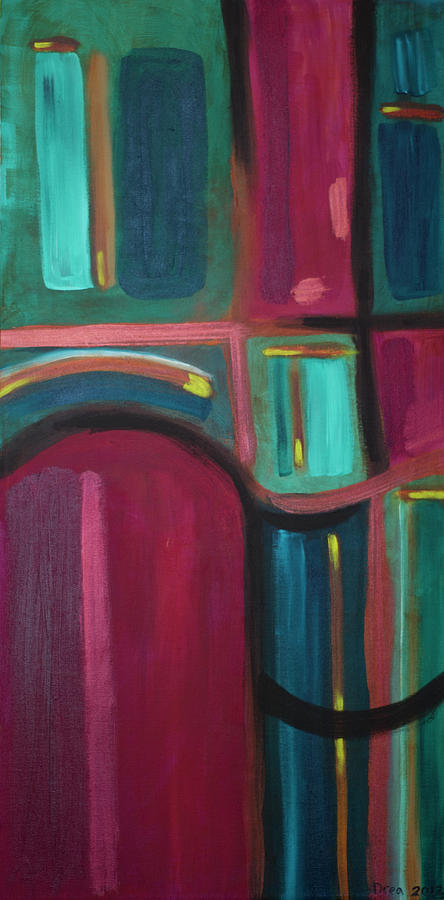
image

Drea Art
dreajensengallery.artistwebsites.com
facebook.com/dreajensenart
virtualartistaltar.com

THE FOURTH SIGN OF THE ZODIAC

1.

Why should I have been surprised?
Hunters walk the forest
without a sound.
The hunter, strapped to his rifle,
the fox on his feet of silk,
the serpent on his empire of muscles~
all move in a stillness,
hungry, careful, intent.
Just as the cancer
entered the forest of my body,
without a sound.

2.

The question is,
what will it be like
after the last day?
Will I float
into the sky
or will I fray
within the earth or a river~
remembering nothing?
How desperate I would be
if I couldn’t remember
the sun rising, if I couldn’t
remember trees, rivers; if I couldn’t
even remember, beloved,
your beloved name.

3.

I know, you never intended to be in this world.
But you’re in it all the same.

So why not get started immediately.

I mean, belonging to it.
There is so much to admire, to weep over.

And to write music or poems about.

Bless the feet that take you to and fro.
Bless the eyes and the listening ears.
Bless the tongue, the marvel of taste.
Bless touching.

You could live a hundred years, it’s happened.
Or not.
I am speaking from the fortunate platform
of many years,
none of which, I think, I ever wanted.
Do you need a prod?
Do you need a little darkness to get you going?
Let me be as urgent as a knife, then,
and remind you of Keats,
so single of purpose and thinking, for a while,
he had a lifetime.

4.

Late yesterday afternoon, in the heat,
all the fragile blue flowers in bloom
in the shrubs in the yard next door had
tumbled from the shrubs and lay
wrinkled and fading in the grass. But
this morning the shrubs were full of
the blue flowers again. There wasn’t
a single one on the grass. How, I
wondered, did they roll or crawl back
to the shrubs and then back up to
the branches, that fiercely wanting,
as we all do, just a little more of
life?

~ by Mary Oliver

being so beautiful

Standard

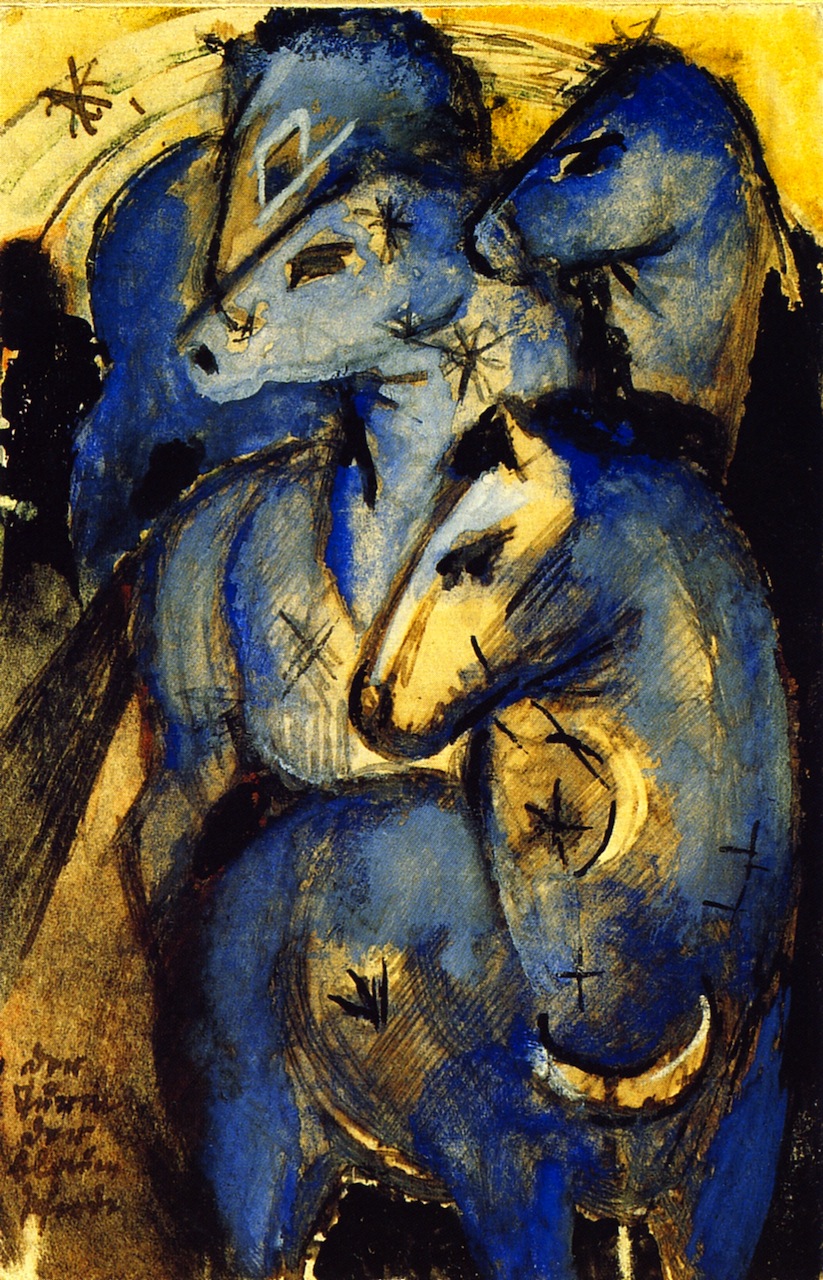
FRANZ MARC’S BLUE HORSES

I step into the painting of the four blue horses.
I am not even surprised that I can do this.

One of the horses walks toward me.
His blue nose noses me lightly. I put my arm
over his blue mane, not holding on, just
commingling.
He allows me my pleasure.
Franz Marc died a young man, shrapnel in his brain.
I would rather die than try to explain to the blue horses
what war is.
They would either faint in horror, or simply
find it impossible to believe.
I do not know how to thank you, Franz Marc.
Maybe our world will grow kinder eventually.
Maybe the desire to make something beautiful
is the piece of God that is inside each of us.
Now all four horses have come closer,
are bending their faces toward me
as if they have secrets to tell.
I don’t expect them to speak, and they don’t.
If being so beautiful isn’t enough, what
could they possibly say?

by Mary Oliver

display_image.php

1912~13 sketch on a postcard by Franz Marc


midst of winter

Standard

“In the midst of winter, I found there was, within me, an invincible summer. And that makes me happy. For it says that no matter how hard the world pushes against me, within me, there’s something stronger ~ something better, pushing right back.”

~ Albert Camus

AFTER READING LUCRETIUS, I GO TO THE POND

The slippery green frog
that went to his death
in the heron’s pink throat
was my small brother,

and the heron
with the white plumes
like a crown on his head
who is washing now his great sword-beak
in the shining pond
is my tall thin brother.

My heart dresses in black
and dances.

~ By Mary Oliver