rough peace

Standard

The Waterfall
by Mary Oliver

For all the said,
I could not see the waterfall
until I came and saw the water falling,
its lace legs and its womanly arms sheeting down,

while something howled like thunder,
over the rocks,
all day and all night –
unspooling

like ribbons made of snow,
or god’s white hair.
At any distance
it fell without a break or seam, and slowly, a simple

preponderance –
a fall of flowers – and truly it seemed
surprised by the unexpected kindness of the air and
light-hearted to be

flying at last.
Gravity is a fact everybody
knows about.
It is always underfoot,

like a summons,
gravel-backed and mossy,
in every beetled basin –
and imagination –

that striver,
that third eye –
can do a lot but
hardly everything. The white, scrolled

wings of the tumbling water
I never could have
imagined. And maybe there will be,
after all,

some slack and perfectly balanced
blind and rough peace, finally,
in the deep and green and utterly motionless pools after all that
falling?

scatter your flowers

Standard

Flare
by Mary Oliver

1.

Welcome to the silly, comforting poem.

It is not the sunrise,
which is a red rinse,
which is flaring all over the eastern sky;

it is not the rain falling out of the purse of God;

it is not the blue helmet of the sky afterward,

or the trees, or the beetle burrowing into the earth;

it is not the mockingbird who, in his own cadence,
will go on sizzling and clapping
from the branches of the catalpa that are thick with blossoms,
that are billowing and shining,
that are shaking in the wind.

2.

You still recall, sometimes, the old barn on your
great-grandfather’s farm, a place you visited once,
and went into, all alone, while the grownups sat and
talked in the house.
It was empty, or almost. Wisps of hay covered the floor,
and some wasps sang at the windows, and maybe there was
a strange fluttering bird high above, disturbed, hoo-ing
a little and staring down from a messy ledge with wild,
binocular eyes.
Mostly, though, it smelled of milk, and the patience of
animals; the give-offs of the body were still in the air,
a vague ammonia, not unpleasant.
Mostly, though, it was restful and secret, the roof high
up and arched, the boards unpainted and plain.
You could have stayed there forever, a small child in a corner,
on the last raft of hay, dazzled by so much space that seemed
empty, but wasn’t.
Then–you still remember–you felt the rap of hunger–it was
noon–and you turned from that twilight dream and hurried back
to the house, where the table was set, where an uncle patted you
on the shoulder for welcome, and there was your place at the table.

3.

Nothing lasts.
There is a graveyard where everything I am talking about is,
now.

I stood there once, on the green grass, scattering flowers.

4.

Nothing is so delicate or so finely hinged as the wings
of the green moth
against the lantern
against its heat
against the beak of the crow
in the early morning.

Yet the moth has trim, and feistiness, and not a drop
of self-pity.

Not in this world.

5.

My mother
was the blue wisteria,
my mother
was the mossy stream out behind the house,
my mother, alas, alas,
did not always love her life,
heavier than iron it was
as she carried it in her arms, from room to room,
oh, unforgettable!

I bury her
in a box
in the earth
and turn away.
My father
was a demon of frustrated dreams,
was a breaker of trust,
was a poor, thin boy with bad luck.
He followed God, there being no one else
he could talk to;
he swaggered before God, there being no one else
who would listen.
Listen,
this was his life.
I bury it in the earth.
I sweep the closets.
I leave the house.

6.

I mention them now,
I will not mention them again.

It is not lack of love
nor lack of sorrow.
But the iron thing they carried, I will not carry.

I give them–one, two, three, four–the kiss of courtesy,
of sweet thanks,
of anger, of good luck in the deep earth.
May they sleep well. May they soften.

But I will not give them the kiss of complicity.
I will not give them the responsibility for my life.

7.

Did you know that the ant has a tongue
with which to gather in all that it can
of sweetness?

Did you know that?

8.

The poem is not the world.
It isn’t even the first page of the world.

But the poem wants to flower, like a flower.
It knows that much.

It wants to open itself,
like the door of a little temple,
so that you might step inside and be cooled and refreshed,
and less yourself than part of everything.

9.

The voice of the child crying out of the mouth of the
grown woman
is a misery and a disappointment.
The voice of the child howling out of the tall, bearded,
muscular man
is a misery, and a terror.

10.

Therefore, tell me:
what will engage you?
What will open the dark fields of your mind,
like a lover
at first touching?

11.

Anyway,
there was no barn.
No child in the barn.

No uncle no table no kitchen.

Only a long lovely field full of bobolinks.

12.

When loneliness comes stalking, go into the fields, consider
the orderliness of the world. Notice
something you have never noticed before,

like the tambourine sound of the snow-cricket
whose pale green body is no longer than your thumb.

Stare hard at the hummingbird, in the summer rain,
shaking the water-sparks from its wings.

Let grief be your sister, she will whether or no.
Rise up from the stump of sorrow, and be green also,
like the diligent leaves.

A lifetime isn’t long enough for the beauty of this world
and the responsibilities of your life.

Scatter your flowers over the graves, and walk away.
Be good-natured and untidy in your exuberance.

In the glare of your mind, be modest.
And beholden to what is tactile, and thrilling.

Live with the beetle, and the wind.

This is the dark bread of the poem.
This is the dark and nourishing bread of the poem.

bird of the heart

Standard

Wild, Wild
By Mary Oliver

This is what love is:

The dry rose bush the gardener, in his pruning, missed

Suddenly bursts into bloom.

A madness of delight; an obsession.

A holy gift, certainly,

But often, alas, improbable.

Why couldn’t Romeo have settled for someone else?

Why couldn’t Tristan and Isolde have refused

The shining cup

Which would have left peaceful the whole kingdom?

Wild sings the bird of the heart in the forests

Of our lives.

Over and over Faust, standing in the garden, doesn’t know

Anything that’s going to happen, he only sees

The face of Marguerite, which is irresistible.

And wild, wild sings the bird.

imagination

Standard

One
by Mary Oliver

The mosquito is so small
it takes almost nothing to ruin it.
Each leaf, the same.
And the black ant, hurrying.
So many lives, so many fortunes!
Every morning, I walk softly and with forward glances
down to the ponds and through the pinewoods.
Mushrooms, even, have but a brief hour
before the slug creeps to the feast,
before the pine needles hustle down
under the bundles of harsh, beneficent rain.
How many, how many, how many
make up a world!
And then I think of that old idea: the singular
and the eternal.
One cup, in which everything is swirled
back to the color of the sea and sky.
Imagine it!
A shining cup, surely!
In the moment in which there is no wind
over your shoulder,
you stare down into it,
and there you are,
your own darling face, your own eyes.
And then the wind, not thinking of you, just passes by,
touching the ant, the mosquito, the leaf,
and you know what else!
How blue is the sea, how blue is the sky,
how blue and tiny and redeemable everything is, even you,
even your eyes, even your imagination.

lightning of years

Standard
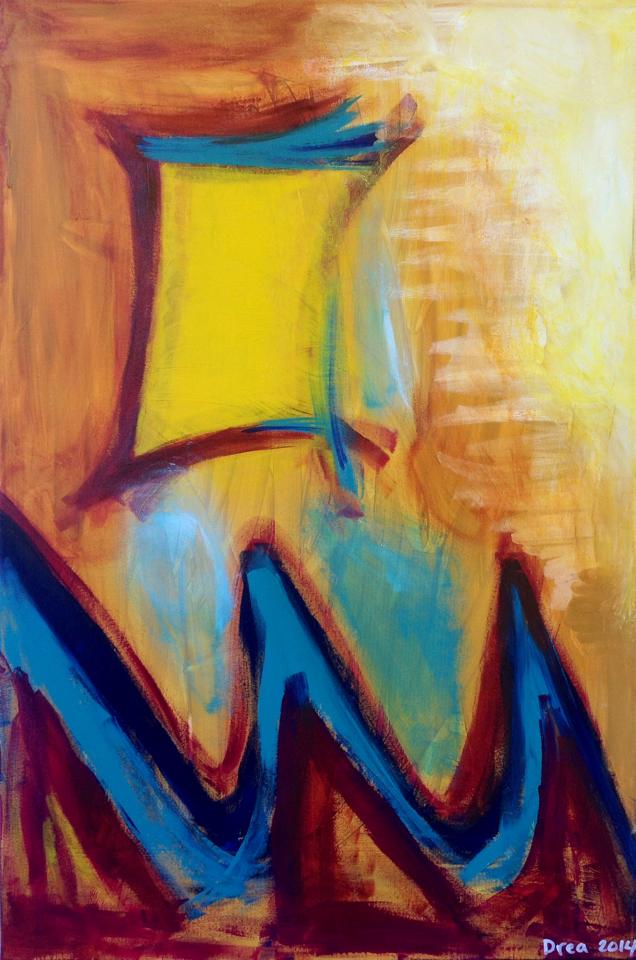
Golden Door 2014 by Drea A golden door of incandescent brilliance, patience equanimity, and resolute with knowledge and respect. Radiant life energy to honor limitless love in glorious space.  http://dreajensengallery.artistwebsites.com/featured/golden-door-2014-drea-jensen.html

Golden Door 2014 by Drea
A golden door of incandescent brilliance, patience equanimity, and resolute with knowledge and respect. Radiant life energy to honor limitless love in glorious space.
http://dreajensengallery.artistwebsites.com/featured/golden-door-2014-drea-jensen.html

In Praise of Craziness, of a Certain Kind
by Mary Oliver

On cold evenings
my grandmother,
with ownership of half her mind-
the other half having flown back to Bohemia-

spread newspapers over the porch floor
so, she said, the garden ants could crawl beneath,
as under a blanket, and keep warm,

and what shall I wish for, for myself,
but, being so struck by the lightning of years,
to be like her with what is left, that loving.

giving a gift

Standard

The Gift
By Mary Oliver

I wanted to thank the mockingbird for the vigor of his song.
Every day he sang from the rim of the field, while I picked
blueberries or just idled in the sun.
Every day he came fluttering by to show me, and why not,
the white blossoms in this wings.
So one day I went there with a machine, and played some songs of
Mahler.
The mockingbird stopped singing, he came close and seemed
to listen.
Now when I go down to the field, a little Mahler spills
through the sputters of his song.
How happy I am, lounging in the light, listening as the music
floats by!
And I give thanks also for my mind, that thought of giving
a gift.
And mostly I’m grateful that I take this world so seriously

Liz 2016

Standard
Liz 2016 by Drea A daughter can fill your life with love, peace and laughter. http://dreajensengallery.pixels.com/featured/liz-2016-drea-jensen.html

Liz 2016 by Drea
A daughter can fill your life with love, peace and laughter.
http://dreajensengallery.pixels.com/featured/liz-2016-drea-jensen.html

Heavy
by Mary Oliver

That time
I thought I could not
go any closer to grief
without dying

I went closer,
and I did not die.
Surely God
had His hands in this,

as well as friends.
Still, I was bent
and my laughter,
as the poet said,

was nowhere to be found.
Then said my friend Daniel
(brave even among lions),
“It’s not the weight you carry

but how you carry it –
books, bricks, grief –
it’s all in the way
you embrace it, balance it, carry it

when you cannot and would not,
put it down.”
So I went practicing.
Have you noticed?

Have you heard
the laughter
that comes, now and again,
out of my startled mouth?

How I linger
to admire, admire, admire
the things of this world
that are kind, and maybe

also troubled –
roses in the wind,
the sea geese on the steep waves,
a love
to which there is no reply?

weeds are rising

Standard

Evidence
by Mary Oliver

I.

Where do I live? If I had no address, as many people
do not, I could nevertheless say that I lived in the
same town as the lilies of the field, and the still
waters.

Spring, and all through the neighborhood now there are
strong men tending flowers.

Beauty without purpose is beauty without virtue. But
all beautiful things, inherently, have this function –
to excite the viewers toward sublime thought. Glory
to the world, that good teacher.

Among the swans there is none called the least, or
the greatest.

I believe in kindness. Also in mischief. Also in
singing, especially when singing is not necessarily
prescribed.

As for the body, it is solid and strong and curious
and full of detail; it wants to polish itself; it
wants to love another body; it is the only vessel in
the world that can hold, in a mix of power and
sweetness: words, song, gesture, passion, ideas,
ingenuity, devotion, merriment, vanity, and virtue.

Keep some room in your heart for the unimaginable.

2.

There are many ways to perish, or to flourish.

How old pain, for example, can stall us at the threshold of function….

Still friends, consider stone, that is without the fret of gravity, and water that is without anxiety.

And the pine trees that never forget their recipe for renewal.

And the female wood duck who is looking this way and that way for her children. And the snapping turtle who is looking this way and that way also. This is the world.

And consider, always, every day, the determination of the grass to grow despite the unending obstacles.

3.

I ask you again: if you have not been enchanted by this adventure–your life–what would do for you?

And, where are you, with your ears bagged down as if with packets of sand? Listen. We all have much more listening to do. Tear the sand away. And listen. The river is singing. …

For myself, I have walked in these woods for
More than forty years, and I am the only
thing, it seems, that is about to be used up.
Or, to be less extravagant, will, in the
Foreseeable future, be used up.

First, though, I want to step out into some
fresh morning and look around and hear myself
crying out: “The house of money is falling! The house of money is falling! The weeds are rising! The weeds are rising!”

into the world

Standard
Student Art

Student Art

What is it?
By Mary Oliver

Who can say,
is it a snowy egret
or a white flower
standing

at the glossy edge
of the lily-
and frog-filled pond?
Hours ago the orange sun

opened the cups of the lilies
and the leopard frogs
began kicking
their long muscles,

breast-stroking
like little green dwarves
under the roof of the rich,
iron-colored water.

Now the soft
eggs of the salamander
in their wrappings of jelly
begin to shiver.

They’re tired of sleep.
They have a new idea.
They want to swim away
into the world.