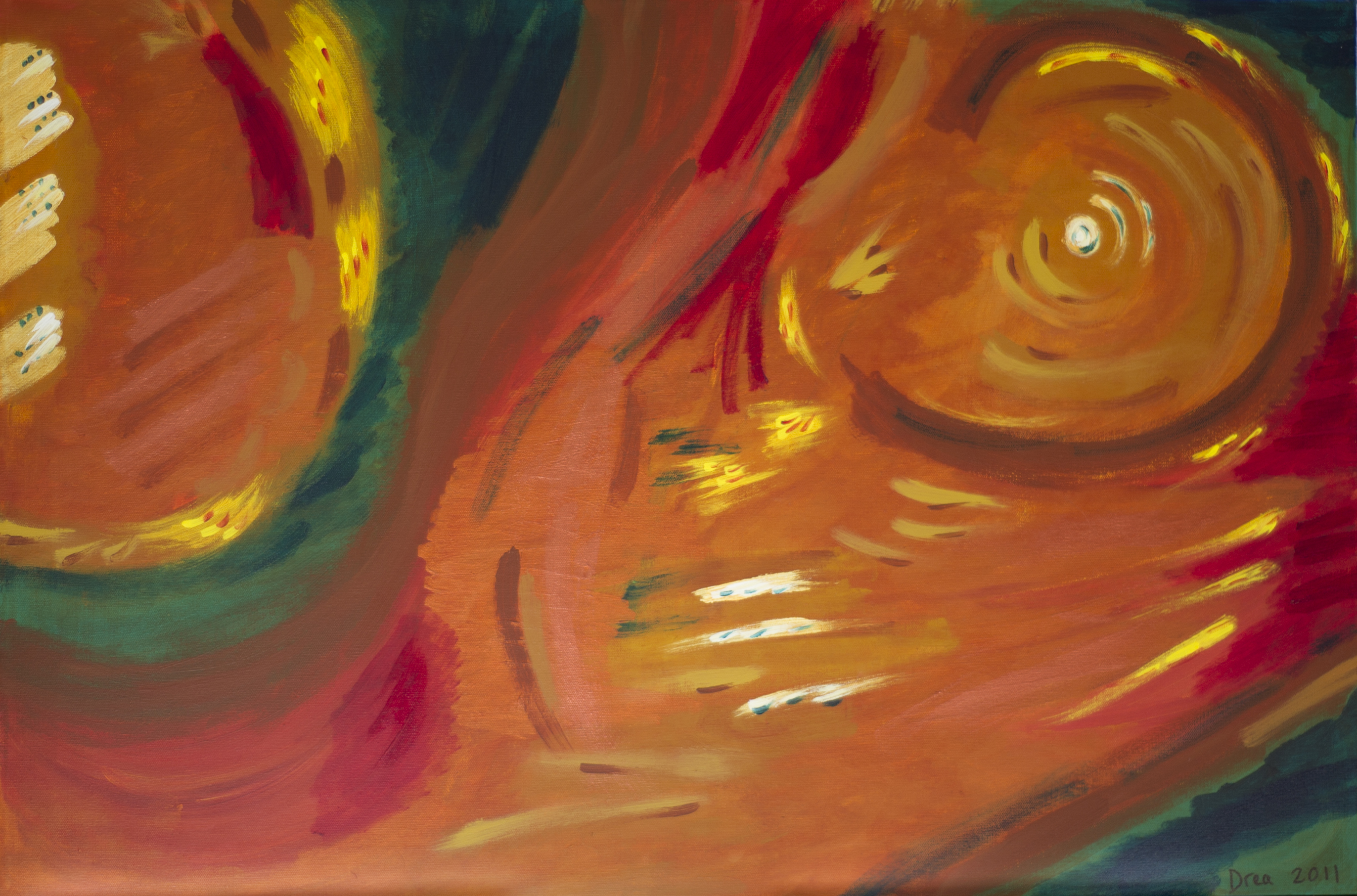
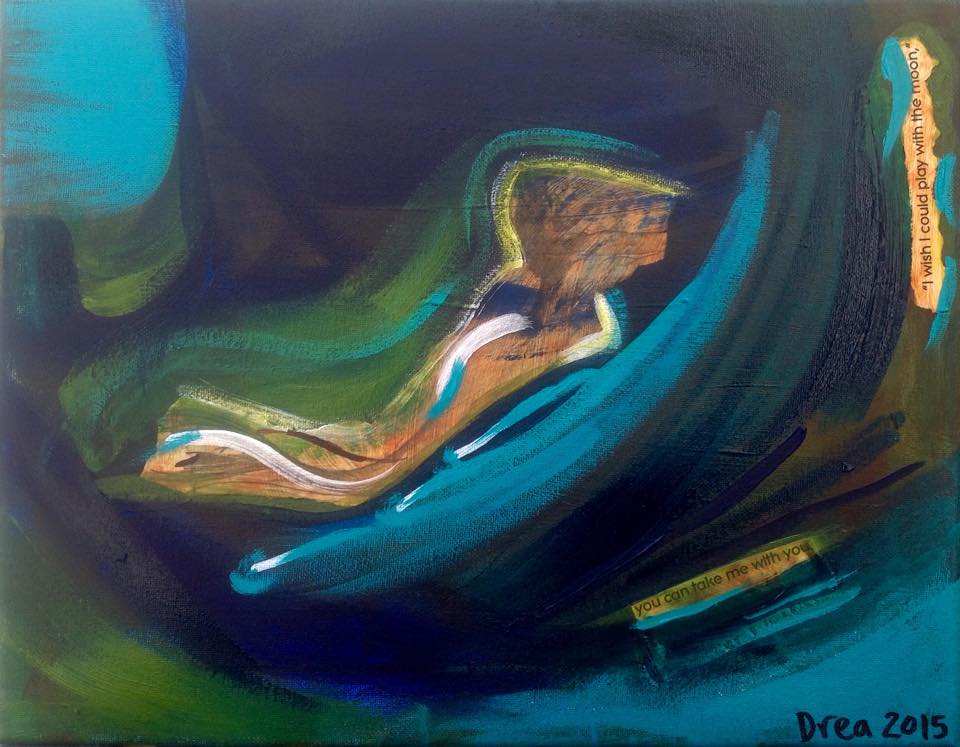
pure peace of giving

Standard

Drea Art
dreajensengallery.pixels.com
facebook.com/dreajensenart
virtualartistaltar.com

Goldenrod
By Mary Oliver

On roadsides,
in fall fields,
in rumpy bunches,
saffron and orange and pale gold,

in little towers,
soft as mash,
sneeze-bringers and seed-bearers,
full of bees sand yellow beads and perfect flowerlets

and orange butterflies.
I don’t suppose
much notice comes of it, except for honey,
and how it heartens the heart with its

blank blaze.
I don’t suppose anything loves it, except, perhaps,
the rocky voids
filled by its dumb dazzle.

For myself,
I was just passing by, when the wind flared
and the blossoms rustled,
and the glittering pandemonium

leaned on me.
I was just minding my own business
when I found myself on their straw hillsides,
citron and butter-colored,

and was happy, and why not?
Are not the difficult labors of our lives
full of dark hours?
And what has consciousness come to anyway, so far,

that is better than these light-filled bodies?
All day
on their airy backbones
they toss in the wind,

they bend as though it was natural and godly to bend,
they rise in a stiff sweetness,
in the pure peace of giving
one’s gold away.

a silence

Standard

Drea Art
dreajensengallery.pixels.com
facebook.com/dreajensenart
virtualartistaltar.com

Praying
By Mary Oliver

It doesn’t have to be
the blue iris, it could be
weeds in a vacant lot, or a few
small stones; just
pay attention, then patch

a few words together and don’t try
to make them elaborate, this isn’t
a contest but the doorway

into thanks, and a silence in which
another voice may speak.

that deep cup

Standard

Drea Art
dreajensengallery.pixels.com
facebook.com/dreajensenart
virtualartistaltar.com

How Everything Adores Being Alive
by Mary Oliver

What
if you were
a beetle,
and a soft wind

and a certain allowance of time
had summoned you
out of your wrappings,
and there you were,

so many legs
hardening,
maybe even
more than one pair of eyes

and the whole world
in front of you?
And what if you had wings
and flew

into the garden,
then fell
into the up-tipped
face

of a white flower,
and what if you had
a sort of mouth,
a lip

to place close
to the skim
of honey
that kept offering itself –

what would you think then
of the world
as, night and day,
you were kept there –

oh happy prisoner –
sighing, humming,
roaming
that deep cup?

to survive

Standard

Drea Art
dreajensengallery.pixels.com
facebook.com/dreajensenart
virtualartistaltar.com

Dogfish
by Mary Oliver

Some kind of relaxed and beautiful thing
kept flickering in with the tide
and looking around.
Black as a fisherman’s boot,
with a white belly.

If you asked for a picture I would have to draw a smile
under the perfectly round eyes and above the chin,
which was rough
as a thousand sharpened nails.

And you know
what a smile means,
don’t you?

*

I wanted
the past to go away, I wanted
to leave it, like another country; I wanted
my life to close, and open
like a hinge, like a wing, like the part of the song
where it falls
down over the rocks: an explosion, a discovery;
I wanted
to hurry into the work of my life; I wanted to know,
whoever I was, I was

alive
for a little while.

*

It was evening, and no longer summer.
Three small fish, I don’t know what they were,
huddled in the highest ripples
as it came swimming in again, effortless, the whole body
one gesture, one black sleeve
that could fit easily around
the bodies of three small fish.

*

Also I wanted
to be able to love. And we all know
how that one goes,
don’t we?

Slowly

*

the dogfish tore open the soft basins of water.

*

You don’t want to hear the story
of my life, and anyway
I don’t want to tell it, I want to listen

to the enormous waterfalls of the sun.

And anyway it’s the same old story – – –
a few people just trying,
one way or another,
to survive.

Mostly, I want to be kind.
And nobody, of course, is kind,
or mean,
for a simple reason.

And nobody gets out of it, having to
swim through the fires to stay in
this world.

*

And look! look! look! I think those little fish
better wake up and dash themselves away
from the hopeless future that is
bulging toward them.

*

And probably,
if they don’t waste time
looking for an easier world,

they can do it.

green tenderness and rain

Standard

Drea Art
dreajensengallery.pixels.com
facebook.com/dreajensenart
virtualartistaltar.com

Ravens
by Mary Oliver

I don’t know what the ravens are saying this
morning of green tenderness and
rain but, my, what a collection of
squallings and cracklings and whistles, made

with the ruffling of throat feathers and the
stretching of wings, nor is it any single speech
one to the rest, but clearly, an octet, since
they are eight coal-black birds with
dark-brown eyes. I have been in this world just
long enough to learn (not always easily) to love

my neighbors and to allow them every
possibility. Maybe the ravens are talking
for some ultimate vicious but useful purpose, or
maybe it’s only directions to the next mountain, or maybe
it’s simple, silly joy. “hello, ravens,” I say, under
their dark tree and, as if courtesy were of

great importance, they turn, they clack and spill their
delicious glottals, of no consequence but
friendly and without the least judgment, down and
over me.

entirely content

Standard

Drea Art
dreajensengallery.pixels.com
facebook.com/dreajensenart
virtualartistaltar.com

What Gorgeous Thing
by Mary Oliver

I do not know what gorgeous thing
the bluebird keeps saying,
his voice easing out of his throat,
beak, body into the pink air
of the early morning. I like it
whatever it is. Sometimes
it seems the only thing in the world
that is without dark thoughts.
Sometimes it seems the only thing
in the world that is without
questions that can’t and probably
never will be answered, the
only thing that is entirely content
with the pink, then clear white
morning and, gratefully, says so.

dangerous and noble

Standard

Drea Art
dreajensengallery.pixels.com
facebook.com/dreajensenart
virtualartistaltar.com

Starlings in Winter
by Mary Oliver

Chunky and noisy,
but with stars in their black feathers,
they spring from the telephone wire
and instantly

they are acrobats
in the freezing wind.
And now, in the theater of air,
they swing over buildings,

dipping and rising;
they float like one stippled star
that opens,
becomes for a moment fragmented,

then closes again;
and you watch
and you try
but you simply can’t imagine

how they do it
with no articulated instruction, no pause,
only the silent confirmation
that they are this notable thing,

this wheel of many parts, that can rise and spin
over and over again,
full of gorgeous life.

Ah, world, what lessons you prepare for us,
even in the leafless winter,
even in the ashy city.
I am thinking now
of grief, and of getting past it;

I feel my boots
trying to leave the ground,
I feel my heart
pumping hard. I want

to think again of dangerous and noble things.
I want to be light and frolicsome.
I want to be improbable beautiful and afraid of nothing,
as though I had wings.

seal pup

Standard

Drea Art
dreajensengallery.pixels.com
facebook.com/dreajensenart
virtualartistaltar.com

The Return
by Mary Oliver

1.
When I went back to the sea
it wasn’t waiting.
Neither had it gone away.
All its musics were safe and sound; the circling gulls
were still a commonplace, the fluted shells
rolled on the shore
more beautiful than money –
oh, yes, more beautiful than money!
The thick-necked seals
stood in the salted waves with their soft, untroubled faces
gazing shoreward –
oh bed of silk,
lie back now on your prairies of blackness your fields of sunlight
that I may look at you.
I am happy to be home.

2.
I do not want to be frisky, and theatrical.
I do not want to go forward in the parade of names.
I do not want to be diligent or necessary or in any way
heavy.
From my mouth to God’s ear, I swear it; I want only
to be a song.
To wander around in the fields like a little reed bird.
To be a song.

3.
Two eggs rolled from the goose nest
down to the water and halfway into the water.
What good is hoping?
I went there softly, and gathered them
and put them back into the nest
of the goose who bit me hard with her
lovely black beak with the pink
tongue-tip quivering,
and beat my arms with her
lovely long wings
and beat my face with her
lovely long wings,
what good is trying?
She hissed horribly, wanting me to be frightened.
I wasn’t frightened.
I just knew it was over,
those cold white eggs would never hatch,
the birds would forget, soon, and go back,
to the light-soaked pond,
what good is remembering?
But I wasn’t frightened.

4.
Sometimes I really believe it, that I am going to
save my life
a little.

5.
When I found the seal pup alone on the far beach,
not sleeping but looking all around, I didn’t
reason it out, for reason would have sent me away,
I just
went close but not too close, and lay down on the sand
with my back toward it, and
pretty soon it rolled over, and rolled over
until the length of its body lay along
the length of my body, and so we touched, and maybe
our breathing together was some kind of heavenly conversation
in God’s delicate and magnifying language, the one
we don’t dare speak out loud,
not yet.

6.
Rumi the poet was a scholar also.
But Shams, his friend, was an angel.
By which I don’t mean anything patient and sweet,
When I read how he took Rumi’s books and threw them
into the duck pond,
I shouted for joy. Time to live now,
Shams meant.
I see him, turning away
casually toward the road, Rumi following, the books
floating and sinking among the screeching ducks,
oh, beautiful book-eating pond!

7.
The country of the mockingbird is where I now want to be,
thank you, yes.
The days when the snow-white swans might pass over the dunes
are the days I want to eat now, slowly and carefully
and with gratitude. Thank you.
The hours fresh and tidal are the hours I want to hold
in the palm of my hand, thank you, yes.
Such grace, thank you!
The gate I want to open now is the one that leads into
the flower-bed of my mind, thank you, yes.
Every day the slow, fresh wind, thank you, yes.
The wing, in the dark, that touches me.
Thank you.
Yes.

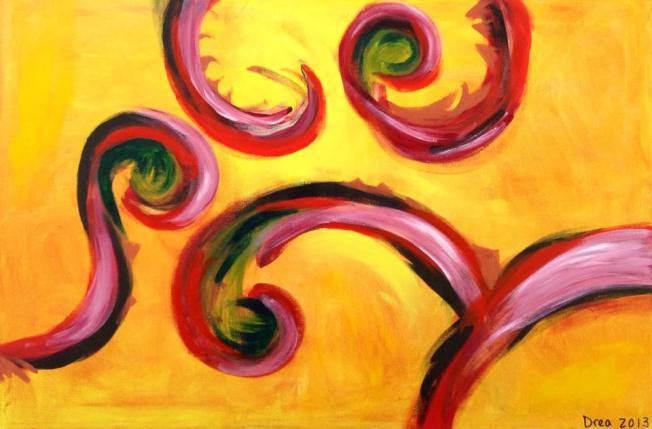
turning in circles

Standard

Drea Art
dreajensengallery.pixels.com
facebook.com/dreajensenart
virtualartistaltar.com

Where Does the Dance Begin, Where Does It End?
by Mary Oliver

Don’t call this world adorable, or useful, that’s not it.
It’s frisky, and a theater for more than fair winds.
The eyelash of lightning is neither good nor evil.
The struck tree burns like a pillar of gold.

But the blue rain sinks, straight to the white
feet of the trees
whose mouths open.
Doesn’t the wind, turning in circles, invent the dance?
Haven’t the flowers moved, slowly, across Asia, then Europe,
until at last, now, they shine
in your own yard?

Don’t call this world an explanation, or even an education.

When the Sufi poet whirled, was he looking
outward, to the mountains so solidly there
in a white-capped ring, or was he looking

to the center of everything: the seed, the egg, the idea
that was also there,
beautiful as a thumb
curved and touching the finger, tenderly,
little love-ring,

as he whirled,
oh jug of breath,
in the garden of dust?